
3rd Option in the Lab Grown vs Natural Diamond Debate!
Torn between natural and lab-grown diamonds? Discover Refined Diamonds—hand-selected & expertly recut. No compromises, just unmatched brilliance.
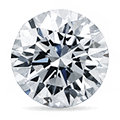


Introducing
Buying an engagement ring should feel exciting, not intimidating. You do not need to become a diamond expert overnight. You just need honest guidance, thoughtful questions, and a jeweler you can trust.
At Diamonds by Rothschild, we guide clients through this process every day from our family-owned jewelry store in the historic Clark Building in downtown Pittsburgh. This guide brings that conversation to you. We aim to help you understand what matters, what to ask, and how to choose an engagement ring with confidence.
What This Guide Covers
Step 1
Forget the "three months' salary" rule. That figure was invented by a De Beers marketing campaign in the 1980s and has no basis in what makes a good ring or a good decision.
The right budget is the one that doesn't create financial stress at the start of your engagement. Engagement rings span a wide range:
Your budget determines the tradeoffs you'll need to make across the 4 Cs (explained in the next step). A good jeweler will help you find the best stone within your range, and not push you toward the top of it.
Pittsburgh note: At Diamonds by Rothschild, our consultations are free, and there's no pressure. We work with all budgets and will tell you honestly what's possible within yours.
Step 2
The 4 Cs are the global standard for evaluating a diamond's quality. Understanding them before you shop is the single most important thing you can do.
The diamond is the showpiece upon which the rest of the ring is built. We have a large selection of loose natural diamonds for sale.
We also have a more in-depth discussion of the 4 C’s of diamonds that determine their characteristics.

The Most Important C
Generally confused with the shape, cut refers to how well a diamond's facets interact with light. A perfectly cut diamond is brilliant and alive. A poorly cut diamond looks dull regardless of its size or color.
GIA grades cut on a scale:
Excellent → Very Good → Good → Fair → Poor.
The most prestigious grading for diamond cut is the AGS000, which is called an Ideal Cut, and it is only given to diamonds that are ideal for Cut, Color, and Clarity.
PRO TIP: Do not compromise on cut to save money. A smaller, perfectly cut diamond will outshine a larger, poorly cut one every time.
Near-Colorless Is the Sweet Spot
Diamonds are graded on a color scale from D (completely colorless) to Z (visibly yellow or brown). The difference between adjacent grades is nearly invisible to the naked eye.
Practical guidance:
Eye-Clean Is the Goal
Clarity refers to the presence of internal characteristics (inclusions) and surface characteristics (blemishes).
Inclusions are naturally occurring, and blemishes are incurred at the time of cutting or through wear and tear.
PRO TIP: VS1–VS2 is the best value for most buyers. SI1 can be excellent if the inclusions are positioned under a prong and not visible. Avoid I-grades for diamonds over 0.75 ct.
A table with the clarity scale is seen below:
Weight, Not Size
Carat measures a diamond's weight, not its diameter.
One carat equals 0.2 grams or 200 milligrams. A higher carat diamond is usually more valuable.
Two diamonds of the same carat weight can look very different in size depending on their cut and shape.
A well-cut 0.90ct diamond will, for example, often look larger than a poorly cut 1.00ct diamond, and generally cost less.
PRO TIP: Oval, Pear, and Marquise cuts appear larger per carat than round or princess cuts because their elongated shape covers more finger surface area.
| Grade | Description |
| FL/IF | Flawless / Internally Flawless — extremely rare and expensive |
| VVS1 / VVS2 | Very Very Slightly Included — inclusions sometimes not visible under 10x magnification |
| VS1 / VS2 | Very Slightly Included — inclusions difficult to see under magnification, eye-clean |
| SI1 / SI2 | Slightly Included — inclusions visible under magnification, possibly eye-clean |
| I1 / I2 / I3 | Included — inclusions visible to the naked eye |
Step 3
Shape is the first thing most people notice about a ring, and the most personal decision you'll make.
Note: diamond "shape" and diamond "cut" are different things. Cut refers to proportions and light performance; shape refers to the outline of the diamond.
The shape of the diamond is a huge part of a ring’s personality.
Different shapes also affect how big the diamond looks on the finger.
Oval and Marquise cuts appear larger per carat than Round diamonds.
Think about style, hand appearance, and sparkle factor when making your choice!
Here's a practical comparison of the most popular shapes:

Optimum light refraction and sparkle make it the most popular diamond shape.
Character: Classic, maximum sparkle
Looks Larger: No
Best For: Traditionalists; those who prioritize brilliance above all else

The oval cut optimizes carat, giving the illusion of a larger stone.
Character: Elongated, modern
Looks Larger: Yes
Best For: Maximizing the visual size of a smaller carat; the elongating effect of the finger.

Combining the brilliance and design of the Round and the Marquise cuts.
Character: Unique, directional, elegant
Looks Larger: Yes
Best For: Statement rings; the pointed tip toward the fingernail creates a distinctive, elongating look

Elongate the finger of the wearer for an appearance of great size and grandeur.
Character: Bold, strongly elongates the finger
Looks Larger: Yes
Best For: Those who love vintage glamour and a bold, directional silhouette

With soft corners, a beautiful alternative to a round or princess cut.
Character: Soft corners, romantic, warm sparkle
Looks Larger: Moderate
Best For: Vintage-inspired aesthetic; particularly beautiful in warmer color grades

A contemporary cut, with optimal fire and brilliance.
Character: Modern, geometric, brilliant
Looks Larger: Moderate
Best For: Clean contemporary style; pairs well with geometric settings

Rectangular facets that beautifully accentuated the stone’s clarity.
Character: Rectangular step-cut, sophisticated
Looks Larger: No
Best For: Minimalists; those who prioritize clarity; works exceptionally well in east-west settings due to its symmetrical geometry.

This unique shape is a square emerald, with linear facets.
Character: Square step-cut, Art Deco
Looks Larger: No
Best For: Vintage and Art Deco aesthetic; best with high-clarity stones as the step-cut makes inclusions more visible

The most brilliant of the rectangular cut diamonds - a popular choice!
Character: Hybrid cut, brilliance in a rectangle
Looks Larger: Moderate
Best For: Those who want the elongated shape of an emerald cut with significantly more sparkle
Some classic cuts include Old European and Old Mine Cut.


There are also other, less popular diamond cut shapes such as the Heart, Baguette, Trilliant, Principle, Briolette, Trapezoid and also hybrid diamond cut shapes such as the Radiant-Cut Modified Brilliant
Trend note (2026): Oval and Pear cuts are currently the most requested shapes at our Pittsburgh showroom, followed by Round Brilliant and Elongated Cushion.
Emerald cuts have grown steadily, particularly in east-west settings, where their symmetrical rectangular geometry sits naturally across the finger.
Marquise is seeing a quiet revival, largely driven by its finger-lengthening effect and vintage character.
Step 4
When choosing an engagement ring, two key elements shape its overall look:
The ring style defines the overall design of the ring. Whether it’s classic and timeless, modern and sleek, or vintage and intricate. It’s all about the ring’s personality and how it reflects your (or your partner’s) taste.
The ring setting, on the other hand, refers to how the diamond or gemstone is secured to the band. This affects both the ring’s durability and how much sparkle it gives off. From elegant solitaires to dazzling halo settings, the setting plays a big role in the ring’s overall beauty.
Together, the style and setting create the perfect engagement ring that feels just right for you.
Right now, the market has moved decisively away from traditional high-set halos toward more architectural, wearable, and distinctly personal designs. Here's what's leading demand.
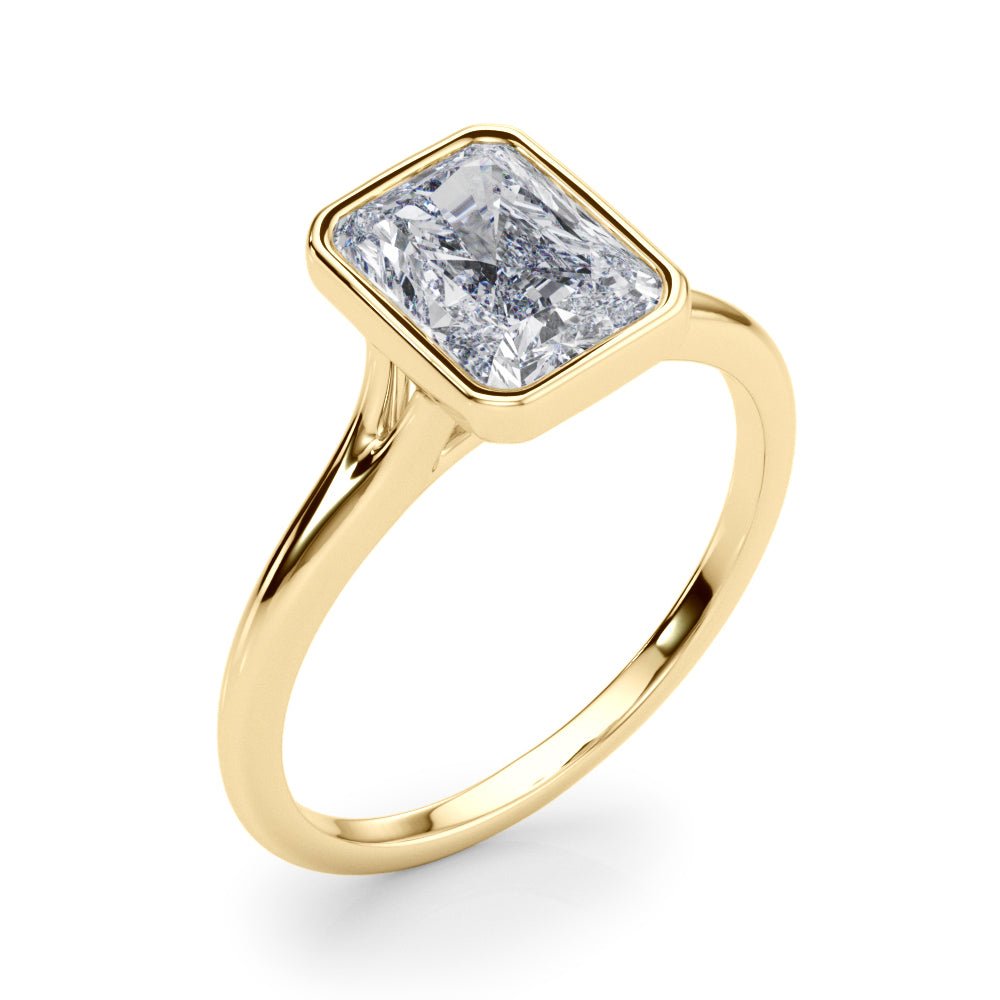
A metal rim encircles the entire stone, holding it flush with the band.
Bezel settings are currently the most requested contemporary style, and for good reason. They're the most secure setting available, completely snag-free, ideal for active lifestyles, and give a ring a clean, modern silhouette that feels both minimal and sculptural.
Works beautifully with oval, round, and emerald cuts.
Image: Solitaire Radiant Bezel Ring Setting

Two stones set side by side, often in contrasting shapes such as an oval and a pear, a round and a marquise, or a diamond and a sapphire.
Originally a 19th-century French style (Napoleon gave Josephine a toi et moi ring), it's been surging in popularity, driven by a broader appetite for distinctive, story-driven rings.
The two stones traditionally symbolize two people becoming one. Works in any metal and with any combination of diamonds, colored gems, or both.
Image: Blue Emerald Cut Sapphire and Pear-shaped Diamond.

Angular, structured designs with deliberate geometry.
Hexagonal bezels, kite-set stones, east-west orientations, shield cuts, or architectural band profiles.
These rings photograph dramatically and feel intentionally designed rather than simply classic. Extremely popular with buyers who want something that feels current
Image: Emerald Cut Diamond in Half Bezel East to West Setting

in the middle of the band.
Timeless, versatile, and lets the stone speak for itself. It remains the most consistently popular choice overall.
Right now, it is particularly in demand in bezel form.

A center stone flanked by two side stones. It is usually a larger stone in the middle with two smaller stones on the side.
It is rich in symbolism and traditionally represented the present, future, and past of the couple, with the largest stone representing the present.
The side stones can be diamonds or colored gems, matched or intentionally contrasting.

A center stone surrounded by a ring of smaller diamonds.
The halo adds significant sparkle and creates the appearance of a larger center stone.
Best with round, oval, cushion, and pear shapes. Less fashionable than five years ago, but still a strong choice for buyers who prioritize brilliance.

Pavè is French for paved, so smaller stones are set along the shank of the band in a manner that resembles cobble stones. It gives the appearance of a solid diamond surface because the diamonds are set so closely together.

Metal claws (prongs) hold the stone in place, allowing more light exposure.

The band splits into two as it reaches the center stone. This design can add visual interest and a sense of uniqueness to the ring.
PRO TIP: If your partner works with their hands, exercises regularly, or simply doesn't like rings that catch on things, a bezel or low-profile solitaire is the right choice. A high cathedral halo is spectacular on the finger but vulnerable in daily wear.
All of these stunning diamond engagement rings are available from our Pittsburgh Jewelry store.
Step 5
The metal sets the ring's color, tone, and long-term wearability.
One important note before the table: gold has surpassed platinum in raw material cost. With gold prices at historic highs, 18k yellow gold is now among the most expensive metal choices for a finished ring — a significant shift from even five years ago.
On top of that, yellow gold is experiencing its strongest fashion moment in decades. Driven by a broader return to warm, maximalist aesthetics and the rise of colored gemstone rings (which pair naturally with yellow gold), it has replaced white metals as the dominant trend in fine jewelry.
Although cost might play a role in deciding the metal you would like to use, this decision is mainly influenced by personal preference and style.

| Metal | Color | Durability | Maintenance | Relative Cost | Best For |
|---|---|---|---|---|---|
| 18k Yellow Gold | Rich warm yellow | High | Very low | $$$$ | The current fashion leader; essential for colored gemstone pairings |
| 18k Rose Gold | Warm blush pink | High | Very low | $$$$ | Romantic, warm aesthetic; pairs beautifully with morganite and sapphire |
| 18k White Gold | Bright white | High | Requires rhodium plating every 1–2 years | $$$$ | Classic white look; pairs with colorless diamonds |
| Platinum | Cool white/grey | Highest | Patinas over time, but that does not negatively affect value, Occasional polishing required | $$$ | Most durable and hypoallergenic; now often less expensive than 18k gold |
| 14k Yellow Gold | Medium warm yellow | Very High | Very low | $$$ | More durable than 18k; lower cost while retaining the yellow aesthetic |
| 14k White Gold | Slightly warmer white | Very High | Requires rhodium plating | $$ | Best durability-to-price ratio for white metal |
| 14k Rose Gold | Softer blush | Very High | Very low | $$ | Most durable rose gold option |
With gold prices elevated, platinum is now often the less expensive choice for a white-metal ring, reversing the traditional assumption.
Platinum doesn't require rhodium plating to maintain its color (white gold does, every 1–2 years), is the most durable metal, and is hypoallergenic.
For buyers who want white metal, platinum deserves serious consideration.
Add Some Color
Yellow gold and colored gemstones are a natural pairing. The warmth of the metal complements the richness of sapphires, rubies, emeralds, and morganite in a way that white metal doesn't.
If you're considering a colored center stone, yellow gold is almost always the right metal choice.

Mix Them Up

An Alternative Path
Before continuing through the remaining steps, consider whether an estate ring is right for you.
An estate ring is a complete piece — stone, setting, and metal already chosen by someone else's hand, often decades ago.
If you go this route, you skip Steps 6 through 8 almost entirely, because the ring already exists. You evaluate the whole, not the parts.

Victorian (1837–1901): Romantic and ornate. Rose gold was the dominant metal. Common motifs include flowers, snakes (symbolizing eternity), hearts, and bows. Often feature rose-cut diamonds and coloured gems.
Edwardian (1901–1910): Delicate platinum filigree and lace-like metalwork. White-on-white aesthetic — diamonds set in platinum. Extremely feminine and intricate.
Art Deco (1920–1935): Geometric, bold, symmetrical. Platinum with high-contrast diamonds. Strong lines, architectural shapes, and occasional coloured accents (sapphire, onyx, coral). The most requested vintage era we see.
Mid-Century (1940s–1960s): Yellow gold returns. Streamlined designs, bold prong settings, and a confidence in the stone over the setting. Simpler but strong.
At Diamonds by Rothschild, we carry a curated selection of estate jewelry in our Pittsburgh showroom, alongside our new and custom offerings.
Estate pieces change regularly. Visit us or book a consultation to see what's currently available.
If you're purchasing a new ring, continue with Step 6 below.
Step 6
With your budget, shape, setting, and metal decided, the final stone decision is which type of center stone to feature. The classic choice is a natural diamond — but color gemstones are a genuinely compelling and increasingly popular alternative.
The default for most engagement rings, and for good reason. A well-chosen natural diamond is brilliant, exceptionally durable (Mohs 10), holds its value over time, and carries universal recognition. Steps 2, 3, and 8 of this guide are written primarily with diamond selection in mind.
If sustainability is a priority, ask about American Diamonds - Refined, natural stones sourced on the secondary market, re-cut and re-graded by GIA, with no new extraction and full traceability.
The most popular choices:
Not every engagement ring needs a white diamond at its center.
Color gemstone engagement rings are growing rapidly. It is driven by a desire for individuality, a connection to vintage aesthetics, and the natural pairing with yellow gold that defines current fine jewelry fashion.

The most requested colored center stone. Available in a wide range of blues (from pale cornflower to deep royal), as well as pink, yellow, orange (padparadscha), and teal.
Hard enough for daily wear (Mohs 9), second only to diamond. Blue sapphires gained renewed popularity after the Princess of Wales's sapphire engagement ring, and have never fully left fashion since.
Pair with yellow gold for a rich, classic combination or with white metal for a crisper contrast.

Deep red, passionate, historically associated with royalty and love.
Rubies are harder to find in large, clean sizes than sapphires, making fine examples rarer and often more valuable.
Mohs hardness 9. Pair with yellow gold for maximum warmth.

Natural spinel is one of the best colored stones for everyday wear — Mohs 8, excellent toughness, and no cleavage planes, meaning it resists chipping as well as scratching.
Available in red, pink, purple, blue, and orange. Red and pink spinel are frequently compared to ruby in color but carry a different character and are almost never treated or heated, making them exceptionally clean and transparent in terms of provenance.
Still underpriced relative to their quality, which makes them one of the better value propositions in natural colored stones.
Pairs well with yellow gold (red, pink, orange) or white metal (blue, purple).

Pale to vivid blue, clean and elegant. Part of the beryl family — the same mineral species as emerald, but far fewer inclusions, giving it exceptional clarity.
Mohs 7.5–8. A good choice for daily wear when set protectively; a bezel or well-secured prong setting is recommended as beryl has cleavage that makes it susceptible to splitting from a hard impact.
Pairs beautifully with white gold or platinum, where the cool blue reads crisp and clear, or with yellow gold for a warmer, more vintage-leaning combination.
At Diamonds by Rothschild, we work with colored gemstones alongside our diamond collection. Our team can help you compare natural sapphires, rubies, and other stones against your style preferences and budget during a free consultation.
Step 7
Getting the size right avoids the cost and delay of resizing. Most engagement rings can be resized by 1–2 sizes in either direction without issue, but resizing is easier and cheaper to avoid.
You want the ring to fit snug but comfortable.
In the United States, ring sizes are typically measured using the numerical scale.
The standard US ring size chart ranges from size 3 to size 13.5, with each whole and half-size representing a specific circumference or diameter of the finger.
At our Pittsburgh showroom, we offer professional ring sizing at no charge.
Step 8
A grading report is a document issued by an independent gemological laboratory that evaluates a stone's characteristics, such as quality, treatment history, and origin, where applicable.
It is not a valuation or certification. It is an objective assessment of what the stone is.
For diamonds, this means the 4 Cs. For colored stones, it means quality, species, variety, and treatment disclosure.
Why grading reports matter: Two stones can look the same to the untrained eye, but carry very different values based on their graded characteristics. Without an independent report, you are relying solely on the seller's word.
For any significant purchase, diamond or colored stone, always ask for the grading report and verify it is issued by a recognized independent laboratory.
A note on Refined American Diamonds: At Diamonds by Rothschild, every Refined American Diamond is re-graded by GIA after our team re-cuts the stone. The grading report reflects the stone's characteristics post-cutting — not what it was when it entered our process. Full traceability, independent grading, no new extraction.
Step 9
Most people spend weeks researching the ring and minutes choosing the jeweler.
The jeweler is the one who interprets the grading report, helps you navigate the budget, shows you two options instead of pushing one, and is still answering the phone when a prong needs attention two years from now. That relationship deserves the same scrutiny as the stone.
AGS membership carries particular weight. The American Gem Society has more stringent membership criteria than most industry bodies. This makes it a genuine credential rather than a standard affiliation.
Responsible Jewellery Council (RJC) is a must if sustainability is an important factor in your decision-making process.
Jewelers of America, American Gem Trade Association (AGTA), and Jewelers Vigilance Committee (JVC) membership also signal accountability to industry standards.
Buying from a local, independent jeweler means you're talking to someone who actually knows diamonds. You are not dealing with a commissioned sales associate working from a script.
In-store, you can see the stone in person under different lighting, ask questions without time pressure, and build a relationship that lasts beyond the purchase.
Diamonds by Rothschild is an excellent choice for a local jeweler and is located in Suite 203 of the historic Clark Building at 717 Liberty Avenue in downtown Pittsburgh.
We are members of the American Gem Society (AGS), Responsible Jewellery Council (RJC), AGTA, JVC, and Jewelers of America.
Consultations are free, in-person or virtual, and there's no obligation to buy.
The ring is ready. Now for the moment itself.
A few practical points:

There's no correct amount. The industry "rule" of three months' salary was a marketing creation and has no practical basis. The right budget does not put you under financial pressure and allows you to get a quality stone. Beautiful rings exist at every price point.
No. Cut quality matters far more than size. A smaller diamond with an Excellent or Ideal cut will outshine a larger diamond with a mediocre cut. Many experienced buyers, given a second chance, say they'd prioritize cut over carat.
Natural diamonds formed underground over billions of years.
Lab-grown diamonds are chemically identical but produced in a controlled environment in weeks. Lab-grown diamonds cost significantly less but have depreciated rapidly in resale value as supply has increased. Natural diamonds hold value better over time.
A third option, American Diamonds - Refined, are natural diamonds sourced on the secondary market, re-cut, and re-graded by GIA. They combine the quality and value retention of natural diamonds with verified sustainable sourcing.
For any significant natural stone, yes. For diamonds, a GIA grading report is the standard, and if the report includes an AGS000 designation, that indicates the stone also meets the AGS Ideal cut standard, the most precise cut grade available.
For coloured stones, GIA, AGL and Gübelin are the most respected laboratories for origin and treatment disclosure.
A grading report is not a valuation. It is an independent assessment of what the stone is. Without one, you are relying entirely on the seller's word.
Yes. At Diamonds by Rothschild, custom design is one of our specialties. The process starts with a free consultation, moves to stone selection and a 3D CAD rendering you can approve before anything is made, and finishes with a hand-crafted piece built to your specifications. Most custom projects are completed within three to four weeks.
The average woman's ring finger in the US is approximately size 6–6.5. Err slightly larger if guessing. It's easier to size a ring down than up, and you can always have it properly fitted after the proposal.
Diamonds by Rothschild is located on the second floor of the historic Clark Building at 717 Liberty Avenue, Suite 203, in downtown Pittsburgh.
We're open Tuesday through Saturday and offer free consultations, in-person and virtual.
Book an appointment or call (412) 471-1750.
Torn between natural and lab-grown diamonds? Discover Refined Diamonds—hand-selected & expertly recut. No compromises, just unmatched brilliance.

Choosing the right metal for your ring is just as important as selecting the perfect design. This guide breaks down popular options like gold, platinum, and titanium, covering their durability,...

Choosing the right ring setting is just as important as picking the perfect diamond. From classic solitaires to intricate halo designs, each setting enhances your stone in a unique way....

Thinking of buying a diamond? Learn the 4 C’s—Cut, Color, Clarity & Carat—to choose the perfect stone. Expert tips inside. Read before you buy!